






 English


What Is Slippage in Prediction Markets? Explore the Impact on Your Predictions and Strategies for 2026

A common question we receive from many traders is: What is slippage in prediction markets? To keep it simple, slippage is when you buy or sell event contracts at prices different from what you initially expected.
We recognize slippage as a common occurrence in trading, especially in certain situations. It can be negative or positive, meaning the phenomenon can work for or against you. Continue reading as we explain how slippage affects your experience in prediction markets, what you can expect and strategies for handling it.

























Quick facts about slippage in prediction markets
- Slippage is the difference between the expected and actual event contract price.
- Slippage is more common in low-liquidity prediction markets.
- Setting limit orders can help in minimizing slippage.
What is slippage in prediction markets?
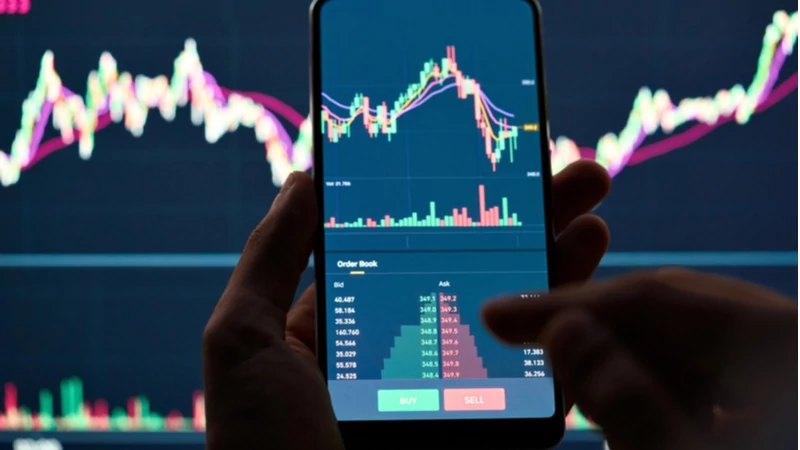
In prediction markets, you buy and sell event contracts that cost from 0.01 to 0.99 in your currency. The price you see before placing an order may differ from the price when the trade eventually executes. That difference is the prediction market slippage.
As such, slippage occurs when the market price changes before your order gets filled. Alternatively, it may happen if there aren’t enough contracts available at your preferred price.
To illustrate, we once placed an order to buy Yes contracts at 0.60 each. However, by the time the order was completed, the contracts were priced at 0.62. In this case, the slippage was 0.02.
Notably, prediction markets are peer-to-peer (P2P). Therefore, the event contract price can change at any time based on supply and demand. You can read our guide that explains what event trading is all about to learn more.
Positive vs negative slippage
We can classify slippage in prediction markets into two types:
| Type | Description |
|---|---|
| Positive slippage | This happens if the trade executes at a more favorable price than you expected. An example is when you place an order at 0.60, but it gets filled at 0.57, saving you 0.03 per contract. |
| Negative slippage | This happens when you buy or sell at a less favorable price. Our earlier example, where the price moved from 0.60 to 0.62, is a negative slippage because it cost us 0.02 more. |
During our assessment of the popular prediction market site Kalshi, we observed both types of slippage. Our guide on how Kalshi works contains more information about the platform.
Causes of slippage in prediction markets
Based on our trading experience, execution slippage in prediction markets is influenced by multiple factors. Below are the major ones:
📉 Low liquidity
A low-liquidity prediction market has fewer buy and sell orders at each contract price level. Therefore, your trade may be filled at multiple prices instead of the one you expected. That leads to order book depth slippage because there aren’t enough event contracts at your desired rate.
📦 Large order sizes
If someone executes a large trade at once, it’ll consume the contracts at the current price. Once the contracts are exhausted, your order will be filled at the next available price, resulting in slippage. We observed this happen with high-impact trades on Polymarket while reviewing the platform.
🌪️ Market volatility
Since prediction markets are P2P, prices can change fast when traders react to new information. For this reason, periods of high volatility often cause slippage, as the market can move in either direction. If you know how to read prediction market probabilities, you’re less likely to rush into placing orders after quick price changes.
📊 Market orders
When trading, you can set a market order to execute at the best available price rather than the specified cost. Naturally, that’ll lead to either negative or positive slippage, depending on the order book.
Upsides and downsides of slippage in prediction markets
Let’s quickly look at the pros and cons of slippage in prediction markets:
- Positive slippage can increase returns
- Slippage reflects real market activity
- It encourages better trading strategies
- Negative slippage can reduce profits
How to minimize slippage in prediction markets
Generally, you can’t eliminate slippage in prediction markets. You can only reduce it, minimizing market impact when the price changes. To achieve that, we recommend applying these strategies:
| Strategy | Description |
|---|---|
| Use limit orders | You can set a price limit you’re willing to settle for to avoid unexpected slippage. |
| Trade in liquid markets | Prediction markets with more buyers and sellers tend to have lower volatility and minimal price variance. |
| Split large orders | You can divide a large order into multiple smaller ones, so you don’t consume all available liquidity at once. |
| Don’t trade during major news events | Significant breaking news or other major events can cause fast price changes. It’s best to wait until the market stabilizes before trading. |
Slippage in prediction markets for US traders
If you’re in the US, slippage in prediction markets works the same way. It results from the variance between the expected and final price of event contracts. You can manage it using the strategies we discussed earlier.
Note that access to prediction markets in the US may differ from other regions. For instance, in our review of how Polymarket works in the US, we noted that the platform is only available as an iOS app for now. You can take a look at the banners on this page to find a site that is available in your location.
Conclusion – Monitor slippage when trading in prediction markets
Slippage is a constant in trading assets, and event contracts in prediction markets are no exception. As a trader, you should also observe the factor because it can affect your potential profits or losses. You can apply our recommended strategies to reduce slippage, especially using limit orders and entering markets with high liquidity.
The best prediction market sites we rate have different limit order tools and thousands of traders who add liquidity. You can pick one from the banners on this page and tap the links to visit the site.
Meet our recommended prediction market sites!
What is slippage in prediction markets? FAQs
What is the meaning of slippage?
Slippage is the difference between the expected price of an event contract and the price at which your trade is executed. It can be positive or negative.
Is 1% slippage good in prediction markets?
Whether 1% slippage is good depends on the prediction market and the amount of event contracts you’re trading. However, 1% is generally considered low.
How to avoid slippage in event trading?
You can’t completely avoid slippage in event trading. Instead, you can minimize its impact by using limit orders and trading in liquid markets.
In this article
- Quick facts about slippage in prediction markets
- What is slippage in prediction markets?
- Causes of slippage in prediction markets
- Upsides and downsides of slippage in prediction markets
- How to minimize slippage in prediction markets
- Slippage in prediction markets for US traders
- Conclusion – Monitor slippage when trading in prediction markets
- What is slippage in prediction markets? FAQs







18+ | Please gamble responsibly and follow the specific online gambling laws in your country. Always confirm that online gambling is legal in your jurisdiction before participating. If you believe you may have a gambling problem, seek help from publicly available resources.